
Aquatic Therapy for Seniors: Exercise Without Putting Excess Stress on Your Joints
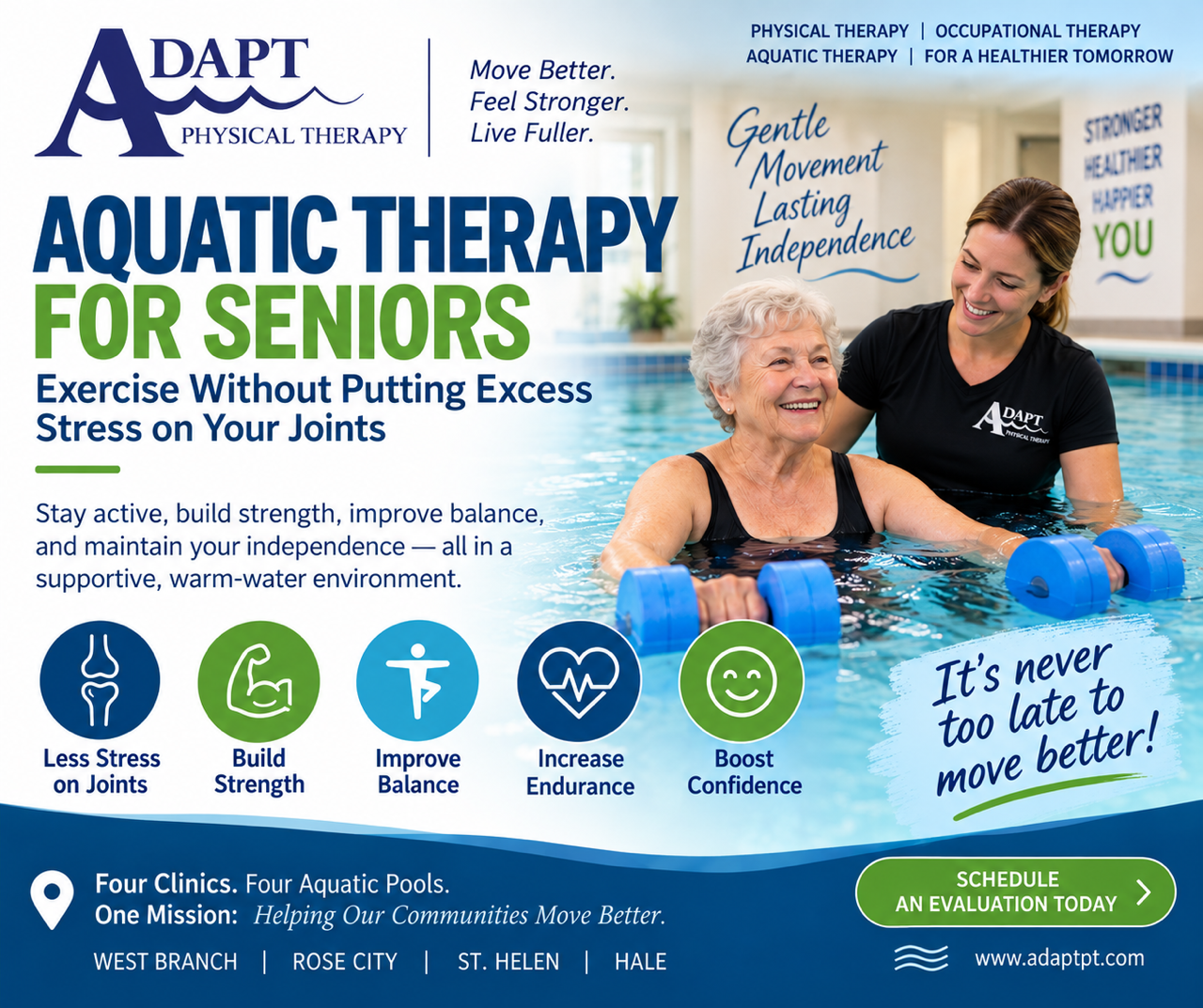
Staying active is one of the most important things we can do as we age. Regular movement can help maintain strength, balance, flexibility, endurance, and independence. But for many older adults, arthritis, joint pain, weakness, balance problems, or recovery from surgery can make traditional exercise difficult or uncomfortable.
That is where aquatic therapy for seniors can make a meaningful difference.
At Adapt Physical Therapy, our warm-water aquatic therapy programs provide a comfortable, supportive environment where seniors can exercise with less stress on painful joints while still working toward better strength, mobility, balance, and confidence.
With in-ground aquatic therapy pools at all four Adapt locations, our goal is simple: help people move better, feel stronger, and remain as independent as possible.
Why Is Aquatic Therapy Especially Helpful for Seniors?
Water changes the way the body experiences exercise.
When you exercise on land, your hips, knees, ankles, and spine must support most of your body weight. For someone dealing with arthritis, joint degeneration, weakness, or pain, even simple activities such as walking or squatting may be challenging.
In water, buoyancy helps support the body and reduces the amount of weight placed through the joints.
This can allow seniors to perform movements that may be uncomfortable or difficult on land.
Walking, leg exercises, balance activities, stretching, and strengthening movements can often be performed more comfortably in the pool.
The result is exercise that can be both gentler and highly effective.
Less Stress on Aching Joints
Joint pain is one of the most common reasons older adults become less physically active.
Unfortunately, becoming less active can sometimes create another problem. Muscles may become weaker, joints may become stiffer, and balance and endurance can decline.
Aquatic therapy provides an opportunity to keep moving without placing the same amount of stress on weight-bearing joints.
It may be particularly helpful for people experiencing discomfort involving the:
- Knees
- Hips
- Ankles
- Feet
- Lower back
- Shoulders
For seniors with arthritis or chronic joint discomfort, exercising in water may feel much more manageable than performing similar movements on land.
Build Strength in a Supportive Environment
Water does more than support your body. It also provides natural resistance.
Every time you move your arms or legs through the water, your muscles work against that resistance.
Physical therapists can use this property of water to design exercises that gradually improve strength in the legs, hips, core, arms, and shoulders.
Improving strength can make everyday activities easier, including getting out of a chair, climbing stairs, getting in and out of a vehicle, carrying groceries, and walking through the community.
The objective is not simply to become stronger in the pool.
The ultimate goal is to help you function better outside the pool.
Improve Balance and Confidence
Falls can have a major impact on an older adult’s independence.
Fear of falling can also cause people to become less active, which may lead to additional weakness and reduced confidence.
The pool can provide a supportive environment for practicing balance exercises.
Because the water surrounds the body, patients may feel more secure while practicing movements such as shifting weight, stepping in different directions, changing direction, marching, and walking.
A physical therapist can progressively challenge balance while keeping the individual’s abilities and safety in mind.
As strength and confidence improve, these skills can be incorporated into exercises on land.
Walking May Feel Easier in the Water
For someone experiencing knee pain, hip pain, weakness, or difficulty walking, practicing gait activities on land can sometimes be uncomfortable.
Water can partially support body weight while still allowing the individual to practice the mechanics of walking.
Aquatic therapy may include forward walking, backward walking, sideways stepping, marching, stepping exercises, and changes in speed or direction.
These activities can help address strength, coordination, endurance, and balance.
For some patients, the pool becomes an important bridge between limited mobility and returning to more comfortable walking on land.
Warm Water Can Encourage Comfortable Movement
Warm-water exercise can feel especially comfortable for people dealing with stiff or painful joints.
The warm environment may help muscles relax and make movement feel easier.
This can be especially valuable for seniors who feel stiff when first beginning an exercise program.
Once the body becomes more comfortable moving, the therapist can gradually progress the exercise program according to the patient’s abilities and goals.
Who May Benefit From Aquatic Therapy?
Aquatic physical therapy may be appropriate for seniors recovering from or living with a variety of conditions, including:
Arthritis: Water-supported movement may allow people with painful knees, hips, or other joints to exercise more comfortably.
Joint replacement: After appropriate medical clearance, aquatic therapy may sometimes be incorporated into rehabilitation following hip or knee replacement.
Back pain: The buoyancy of water may make certain exercises more comfortable for people with back discomfort.
Balance difficulties: The pool provides an environment where balance and stepping activities can be practiced with additional support.
Muscle weakness and deconditioning: Water resistance can help gradually rebuild strength and endurance.
Difficulty walking: Aquatic therapy may provide an opportunity to practice walking while decreasing some of the load placed through the lower extremities.
Neurological conditions: Some individuals with neurological limitations may benefit from carefully designed aquatic exercises as part of a broader rehabilitation program.
Every person is different. A physical therapist can evaluate whether aquatic therapy is appropriate based on medical history, current abilities, precautions, and rehabilitation goals.
Aquatic Therapy Is More Than Simply Exercising in a Pool
Aquatic physical therapy is different from recreational swimming or attending a general water aerobics class.
It is a skilled rehabilitation service.
Your physical therapist evaluates your movement, strength, balance, mobility, pain, and functional limitations and develops exercises based on your individual needs.
Your aquatic program might include:
- Walking and gait training
- Balance exercises
- Lower-extremity strengthening
- Core stabilization
- Range-of-motion exercises
- Flexibility activities
- Cardiovascular conditioning
- Functional movement training
As your condition improves, your therapist may modify your aquatic program and integrate additional land-based exercises.
You Don’t Have to Be a Good Swimmer
One concern we sometimes hear from patients is:
“I don’t know how to swim.”
That does not necessarily mean aquatic therapy is not an option.
Aquatic therapy typically takes place in a controlled therapeutic environment designed for rehabilitation rather than swimming laps.
Your therapist will determine whether aquatic therapy can be performed safely based on your comfort level, medical condition, mobility, and individual needs.
Our Goal Is Independence
The real goal of physical therapy is not simply to complete exercises.
It is to help people participate more fully in their lives.
For a senior, progress might mean being able to walk farther without discomfort, stand up from a favorite chair more easily, safely navigate stairs, return to gardening, attend family events, shop independently, or simply feel more confident moving around the house.
Aquatic therapy can be one tool that helps make those goals possible.
Four Clinics. Four Aquatic Pools. One Mission.
At Adapt Physical Therapy, we are proud to serve communities throughout Northern Michigan with Physical Therapy and Occupational Therapy services.
All four of our clinics — West Branch, Rose City, St. Helen, and Hale — have access to an in-ground aquatic therapy pool.
Having aquatic therapy available locally means our patients do not have to travel to a large metropolitan area to access this valuable rehabilitation option.
We believe seniors in our communities deserve convenient access to high-quality rehabilitation close to home.
Keep Moving at Every Age
Getting older does not mean you have to accept decreasing mobility as inevitable.
When joint pain or weakness makes traditional exercise difficult, there may be another way to keep moving.
Aquatic therapy for seniors provides a supportive environment where movement can become more comfortable, confidence can grow, and strength can gradually return.
If joint pain, arthritis, weakness, balance problems, or difficulty walking are keeping you from the activities you enjoy, talk with the team at Adapt Physical Therapy.
Together, we can help you find a safer and more comfortable path toward better movement.
Schedule an Evaluation
Contact your nearest Adapt Physical Therapy location in West Branch, Rose City, St. Helen, or Hale to learn whether aquatic therapy may be appropriate for you.
Adapt Physical Therapy — Helping Our Communities Move Better.